 L'Amade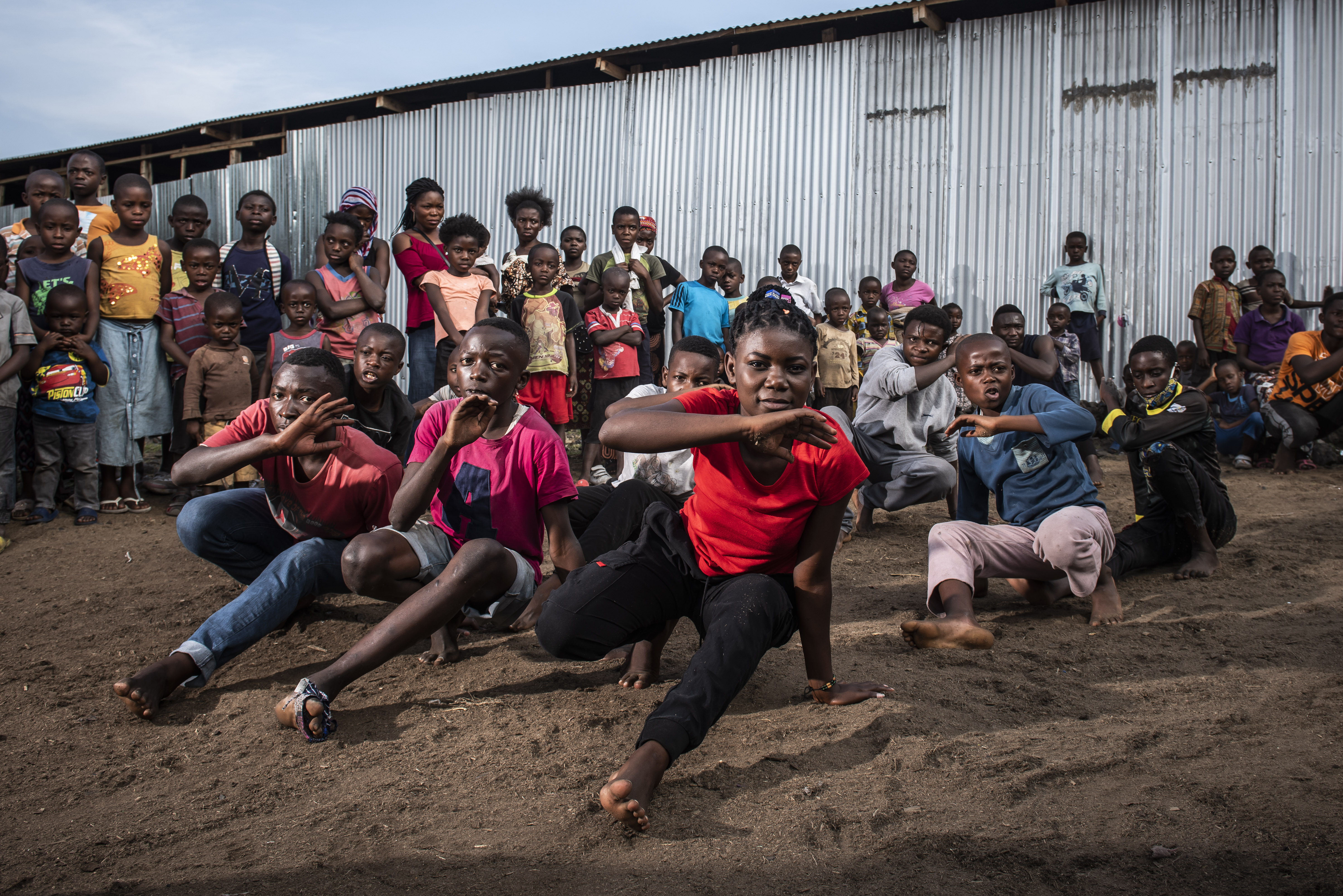
The Democratic Republic of Congo is facing a prolonged crisis, characterised by conflicts and natural disasters that generate massive population movements and lead to serious violations of fundamental rights, such as sexual violence and lack of access to education and the judicial system. In eastern DRC, the limited capacity of state authorities, weak infrastructure and basic social services, and the activism of armed groups are constantly worsening the living conditions of the most vulnerable people.
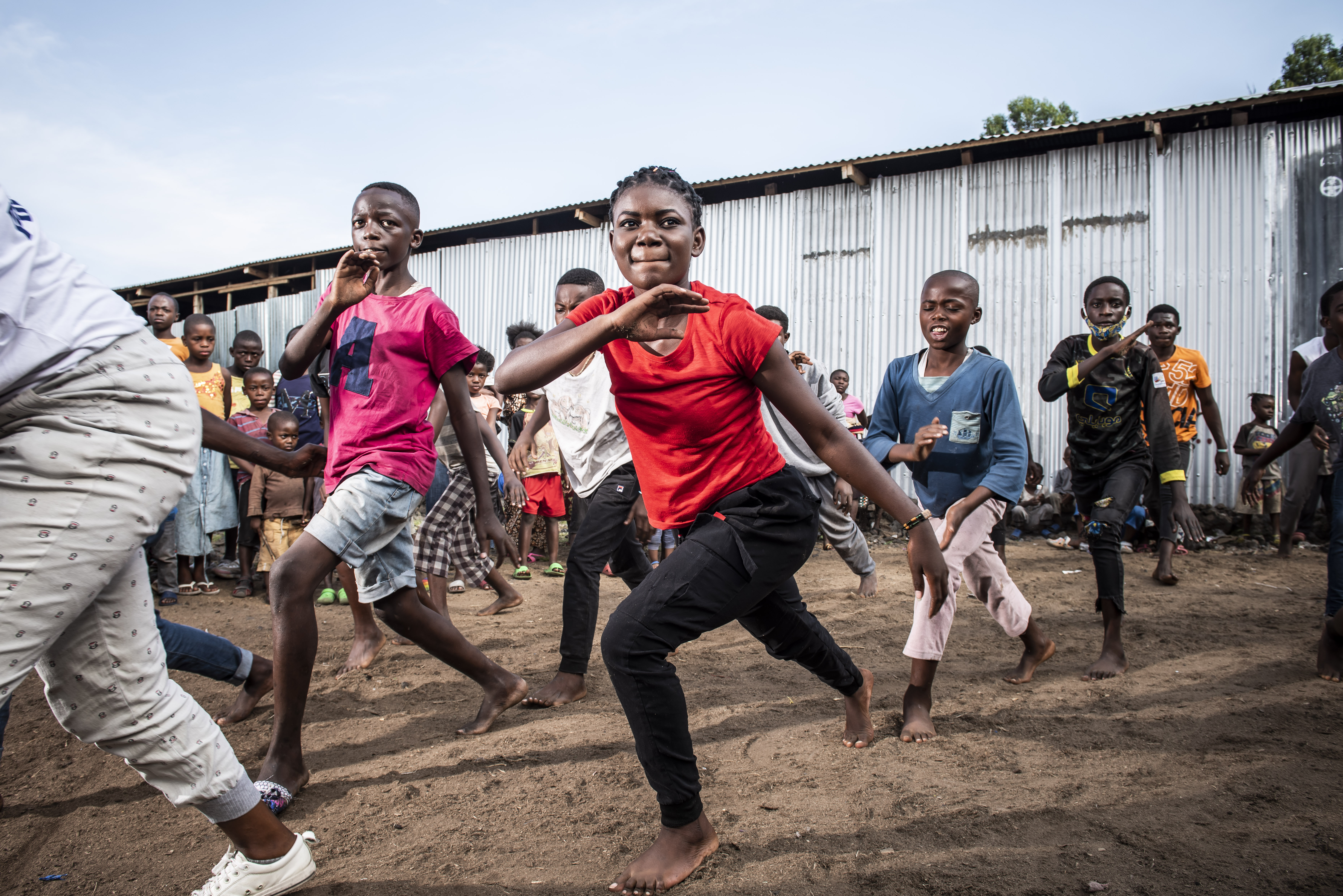
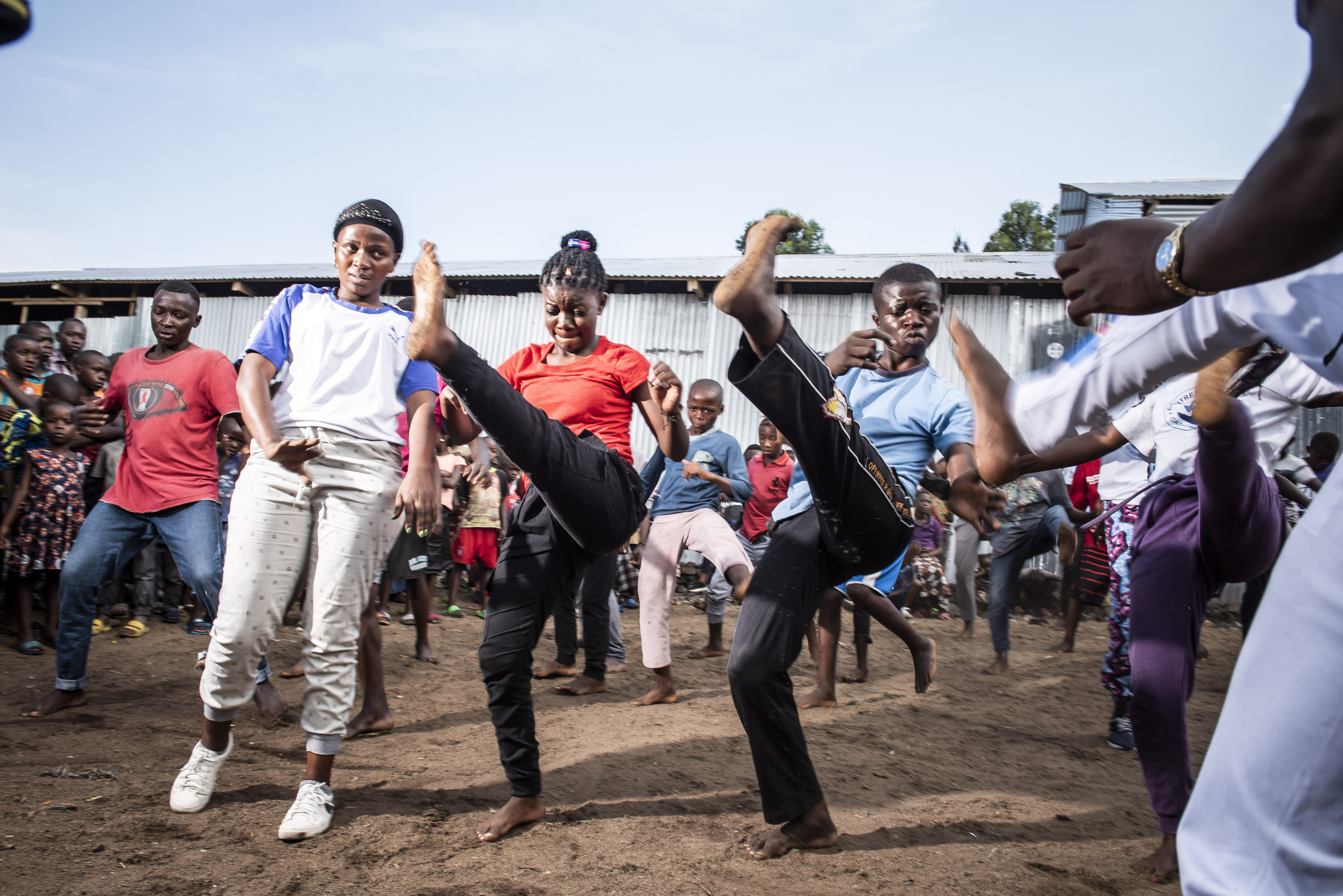
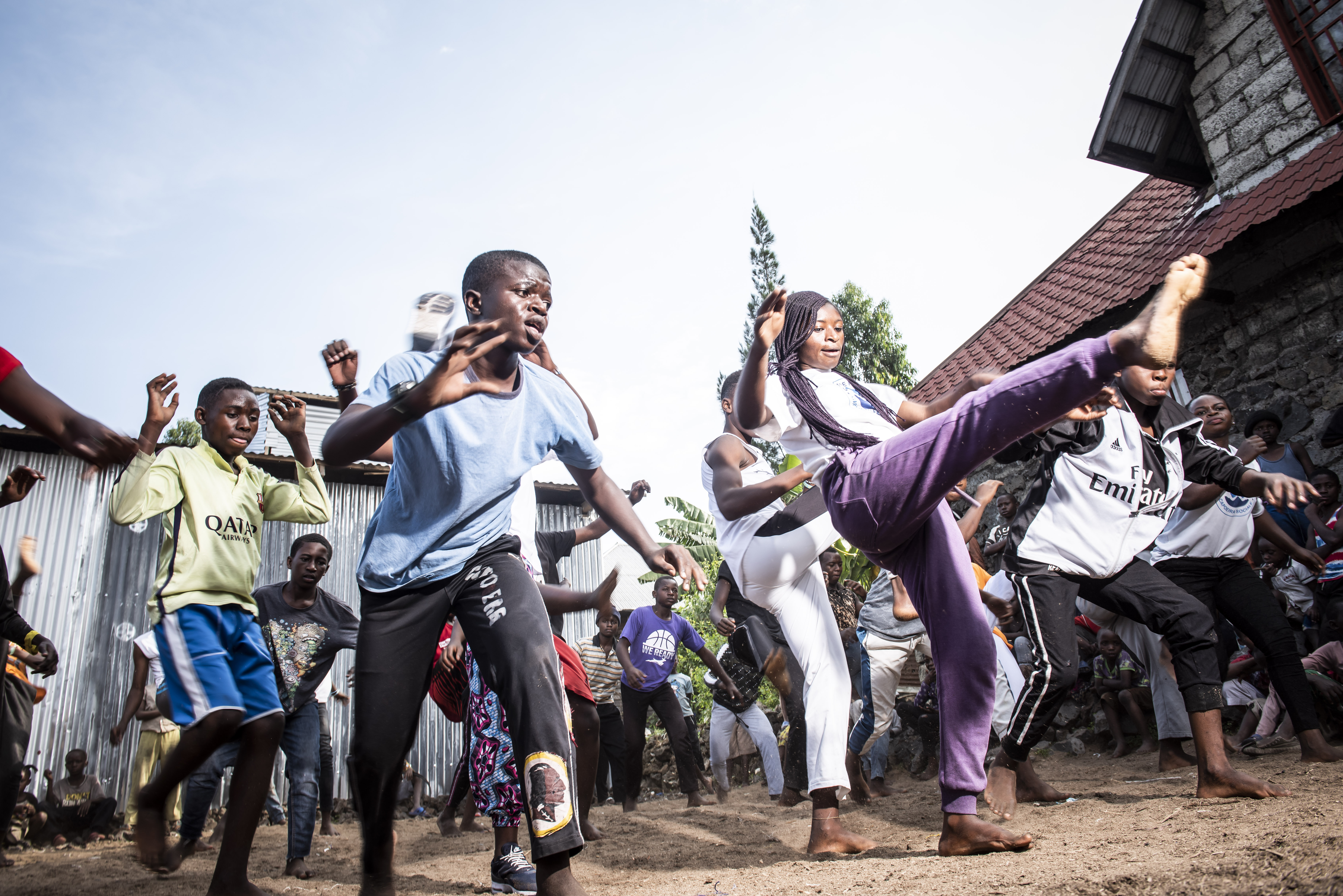
Capoeira, a traditional Afro-Brazilian practice, was born out of a human need to assert one's identity and live freely with dignity. Today, this practice is used as a social technology for the psychosocial care of vulnerable children. By placing the child at the centre of the process, social capoeira provides them with the tools to become actors in their own development.
Launched in 2014 following the visit of HRH The Princess of Hanover to the Democratic Republic of Congo, at the initiative of the Brazilian Embassy in the DRC and in partnership with MONUSCO and UNICEF, a pilot project integrating the practice of capoeira into the process of reconstruction and social reintegration of children demobilised from armed forces and groups was initiated with the association Gingando pela Paz and directly benefited 600 children housed in two reception centres in Goma.
While this project confirmed the benefits of capoeira in the demobilisation and reintegration process for these children, it also paved the way for its development among other categories of vulnerable children.
A second phase was launched in 2019 with the Congolese branch of the Gingando pela Paz association to extend the practice of social capoeira more widely to street children and children who are victims of sexual violence. With this in mind, a social capoeira training centre was set up in Goma to strengthen the care and reintegration systems for these vulnerable children run by local associations wishing to integrate social capoeira into their programmes.
Beyond the transfer of expertise, this centre aims to document the ‘social’ approach and measure its impact on young people and partner organisations.
Finalisation and distribution of the manual on social capoeira
With a view to capitalising on its experience, Gingando pela Paz has begun drafting a reference manual on social capoeira. This manual includes a history of the development of capoeira as an Afro-Brazilian practice, its educational components, the stages of child development, the principles of child protection and psychosocial support, topics complementary to capoeira (education and citizenship, human and children's rights, gender equality, birth registration), and a section on project management (planning, monitoring, evaluation, networking).
Implementation of technical assistance recommendations
The year 2024 was marked by the implementation of a technical assistance programme that formalised the association's economic model and strategic plan for the next three years.
Capacity building for young trainers
Of the 50 young people who joined the Capoeira Social training programme at the Training Centre, six have already been identified, based on their level of capoeira and their general skills, to join the Gingando pela Paz team of trainers.
Finalisation and distribution of the manual on social capoeira
With a view to capitalising on its experience, Gingando pela Paz has begun drafting a reference manual on social capoeira. This manual includes a history of the development of capoeira as an Afro-Brazilian practice, its educational components, the stages of child development, the principles of child protection and psychosocial support, topics complementary to capoeira (education and citizenship, human and children's rights, gender equality, birth registration), and a section on project management (planning, monitoring, evaluation, networking).
Implementation of technical assistance recommendations
The year 2024 was marked by the implementation of a technical assistance programme that formalised the association's economic model and strategic plan for the next three years.
Capacity building for young trainers
Of the 50 young people who joined the Capoeira Social training programme at the Training Centre, six have already been identified, based on their level of capoeira and their general skills, to join the Gingando pela Paz team of trainers.
Technical support for partner organisations.
The social capoeira training centre offers technical, educational and methodological support to organisations that use or wish to use social capoeira in their child protection programmes, thereby helping to strengthen the actions of these organisations and spread the practice of social capoeira in the field of child protection, women and other vulnerable groups.
Emergency psychosocial support for children living in orphanages
Four orphanages will be identified to receive support through the integration of Capoeira Social into their child care programmes.
1. The Capoeira Social manual is published.
2. The association implements its strategic plan in accordance with the recommendations made during the technical assistance mission.
3. Trainers strengthen their knowledge and skills in Capoeira Social.
4. Technical support to partner organisations continues for the integration of Capoeira Social into child protection programmes
5. 400 children living in orphanages receive psychosocial care to support their recovery, trauma healing and development
Social capoeira for developing the potential of vulnerable children 2025
Make a donation-
Congo, The Democratic Republic Of The
Goma
-
Project status
In progress
-
Duration
2025-2026
-
Funding
131 412 euros
-
Beneficiaries
400 children housed in four orphanages in the city of Goma
Six young trainers in Capoeira Social
Two partner organisations (GIZ and IJP) -
Partners
Gingando pela Paz
GIZ, German Cooperation;
French Development Agency;
International Olympic Committee (IOC);
Schneider Foundation.
-
Objectives
Scale up the use of Capoeira Social based on its proven impact and the expertise developed with a view to rolling it out within child protection programmes.
1. Strengthen the association's structure and capitalise on expertise in Capoeira Social for the benefit of child protection
2. Deepen the training of young trainers in order to meet the demand from organisations wishing to strengthen their programmes based on Capoeira Social with a view to sustaining action in this period of crisis
3. Develop Capoeira Social activities to strengthen the psychosocial care of children affected by the security context